


What Natexpo 2026 in Lyon Signals for Ube Powder Buyers?
Natexpo 2026 opened in Lyon this week. For anyone sourcing ube powder, the timing is worth noting: the Philippines suspended fresh ube exports earlier this year, citing a shortage of planting material. Demand for purple yam ingredients is not slowing down. But where does the supply actually come from?
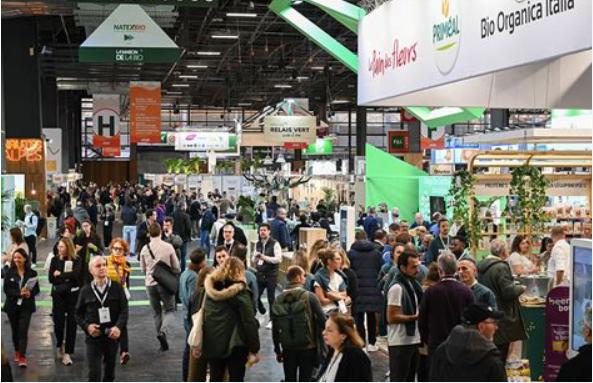
The early data from Natexpo 2026 points to a market that is recovering. More than 250 exhibitors signed up months ahead of the show, and the latest Agence Bio barometer shows 59% of French consumers buying organic at least once a month in 2025—up 5 points from 2024. Weekly consumption rose from 30% to 35%.
Two product trends stand out: functional and wellness products, and healthy snacking with convenience formats. Plant-based proteins are also being repositioned—no longer just “meat replacements,” but standalone ingredients in their own right.
Why this matters for ube powder buyers?
Functional products and convenient formats converge directly on instant drinks. An instant ube latte, a ready-to-mix purple smoothie base, a functional beverage with natural color—these are exactly the applications Natexpo trends point to. They are also the applications where ube powder has the most demanding technical requirements: heat exposure, pH shifts, and storage conditions all affect how the anthocyanins in purple yam hold their color.
If your raw material varies batch to batch, your finished product will too. That is not a colorant problem. It is a process control problem. If you are formulating an instant ube drink, read how to fix ube powder color loss in instant drinks.
Where the supply actually comes from?
Much of the global ube supply conversation centers on the Philippines, where fresh ube exports were suspended earlier this year. That situation matters. But it is not the only source.
Our answer is China—specifically, the southern provinces where purple yam has been cultivated for generations: Guangdong, Guangxi, Yunnan. The variety used for our ube powder, known locally as “Purple Yam,” has an anthocyanin content measured at 60 times that of common white yam. It is grown under directed cultivation techniques that have been refined over decades, not months.You can review our ube powder for bulk supply details.
This is not a substitute ingredient. It is a purple yam, grown under controlled conditions, with documented anthocyanin content and lot-to-lot specifications you can check before you formulate.
For buyers watching Natexpo trends unfold, the real question is simpler: can your supplier deliver the same color, the same anthocyanin content, the same performance in the tenth shipment as in the first? That is what how we keep purple yam quality consistent means in practice—and it is what we build our supply around.
See lot Ube specifications before you formulate
We publish specifications for every batch we ship, including anthocyanin content and color values. If you are sourcing ube powder for a functional beverage or instant drink application, request a sample and review the specs against your formulation requirements.
See our ube powder specifications → Request a Sample


