


How to Avoid Batch-to-Batch Color Variation in Bulk Ube Powder
Two shipments of bulk ube powder. Same spec, same application. The first mixed to a clean violet. The second turned dull grey in the same formula.
That is the kind of batch variation that forces formulators to rework a product that was already approved. It is also the most common complaint we hear from instant drink and bakery teams sourcing bulk ube powder.
Here is what causes it — and what we control before each lot ships.
Why bulk ube powder color varies — and which causes you can control?
Three factors drive most batch-to-batch color variation in bulk ube powder. Two are within your supplier’s control. One starts at the farm.
Raw material grade: the variable you cannot fix after harvest
Ube (Dioscorea alata) is a seasonal crop. Root maturity, soil conditions, and harvest timing all affect anthocyanin content. Powder blended from roots of mixed maturity grades will show more color fluctuation. Powder sorted from a single harvest window will not.
This is the one factor that cannot be corrected after the fact. If the raw material is blended across seasons, no drying profile or milling adjustment will bring the color back into range.
Drying temperature: where most anthocyanin loss happens
Anthocyanins degrade under heat. If drying parameters are not set per lot, color loss happens gradually and unpredictably. A validated drying profile keeps anthocyanin retention within a measurable range.
In our own trials, a 15-minute blanching step before drying made a bigger difference to final color than a 5°C reduction in drying temperature. The order of operations matters more than a single setpoint.
Enzyme activity: why some ube powder keeps fading after milling
Polyphenol oxidase (PPO) and peroxidase (POD) exist naturally in fresh purple yam. If these enzymes remain active after milling, they continue breaking down pigments during storage. A pre-drying blanching step deactivates them.
If your supplier cannot explain how they manage these three factors, batch color shifts are not a surprise. They are expected.
What we control before each bulk ube powder lot ships?
We source fresh purple yam from contracted planting bases across Guangdong, Guangxi, and Yunnan. Raw tubers are sorted by harvest window before processing. We do not blend roots harvested across different seasons.
Every batch follows a validated drying profile, then is milled in our Class D clean purification workshop. Processing is physical only — no carriers, no additives.
Each bulk ube powder shipment includes full batch documentation:
-
Anthocyanin content
-
Moisture content and microbial test results
-
Heavy metal and pesticide residue test data
-
Nutritional composition profile
-
Batch-specific Certificate of Analysis (COA)
If you want to understand how we keep this consistent across shipments, read how we keep purple yam quality consistent, shipment after shipment.
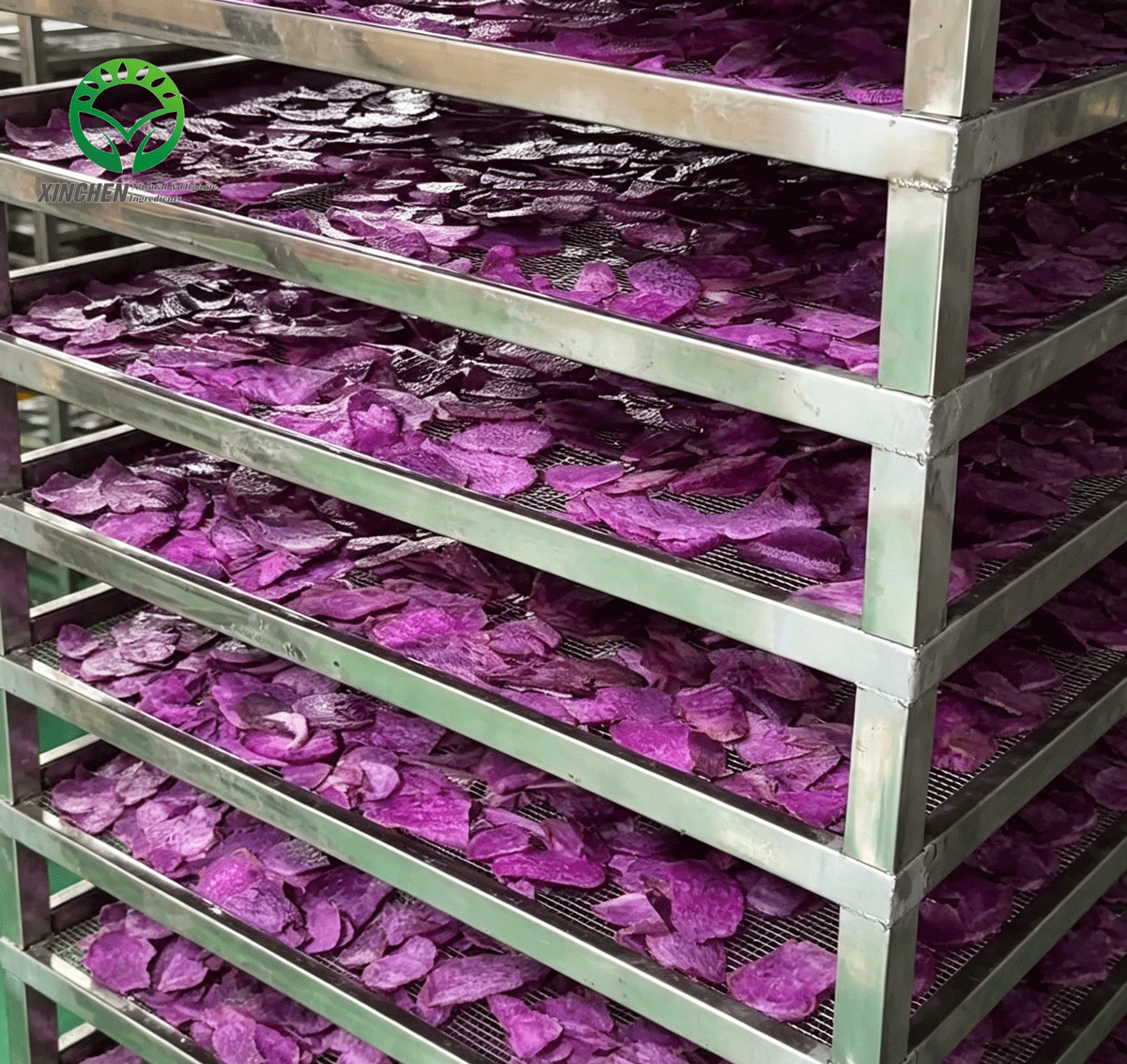
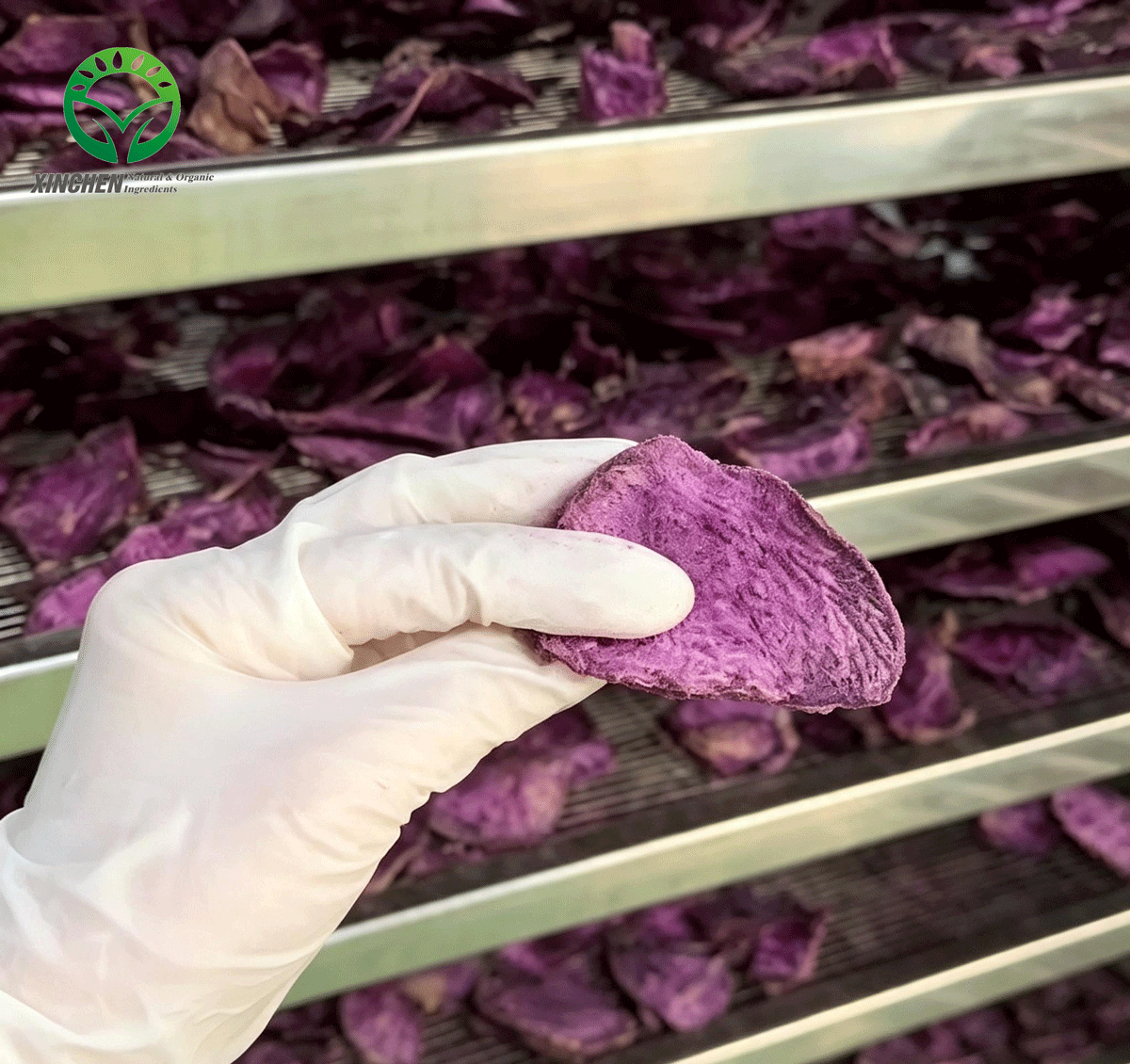
Drying in progress: sliced purple yam on standardized trays before milling. Color at this stage determines anthocyanin retention in the finished powder.
What to ask a bulk ube powder supplier before you commit?
When you screen suppliers for bulk ube powder, ask for these details before placing large orders.
Measured anthocyanin content, not claimed values
Ask for a number, not a range. “High anthocyanin” means nothing without a measured value and a test method. The standard expression is cyanidin-3-glucoside equivalent.
Drying and blanching details, not just “standard process”
Ask how drying temperature is set per lot, and whether there is a blanching step before drying. If the answer is “standard process” without specifics, the supplier either does not know or does not want to share.
Carrier declaration: what is actually in the powder
Some commercial ube powders include maltodextrin or other carriers. If it is not declared on the COA, ask why. For bakery and instant drink applications, undeclared carriers affect both color and texture.
Batch traceability: from finished powder back to harvest lot
Ask whether the supplier keeps a record linking each finished lot to the harvest period and the processing date. Some buyers need this for import documentation or customer audits. If your market requires batch-level traceability, ask for a sample record before you order.
With that record, you can compare incoming lots against the specification and flag deviations before production. If the supplier cannot provide it, you will not know whether a color shift comes from the raw material or from your process.
When the formula, not the bulk ube powder, causes color loss
Batch variation is only part of the challenge. Finished product color is also affected by formula pH, ascorbic acid dosage, and thermal processing. All three affect anthocyanin stability — sometimes more than the powder itself.
If your team develops instant ube beverage products, our formulation guide how to fix ube powder color loss in instant drinks covers the formula side in detail.
What you get when you source bulk ube powder from us?
We manufacture bulk ube powder from Dioscorea alata at our facility in southern China. We supply food manufacturers, ingredient distributors, and nutrition brands across Europe, North America, and Southeast Asia.
When you are sourcing bulk ube powder, share your target specifications and end-use requirements. We can provide product samples along with the corresponding COA, heavy metal, pesticide residue, and nutritional reports.


